


Building a Culture That Lasts: Leadership, Growth, and the Discipline of Rest
By Jesse Jones
I grew up in a family of business owners and always wanted to run my own company. When I think about business, one of my first thoughts is of my Opa (my mom’s dad). Opa was a contractor and his company built things all over the area where I grew up. He worked every day until he was almost 90. He was an immigrant - moving to the US from Germany when he was 12 years old, and an officer in the US Army in WW2. If anyone embodied a strong work ethic, it was him. But the reality is I have no idea what kind of leader he was. I guess I always assumed he was a good leader because his business was relatively successful and I equated “good leader” with “work hard every day until you’re 90”.
However, over time, I’ve realized that leadership at work isn’t just about building a business, it's ultimately about people. It’s about building a culture and modeling the kind of life you hope your team will one day live. Building a business put me in a position to see that culture building requires intentionality and, frankly, that it requires a level of personal growth as a leader that I had simply never pursued before.
Early on, I defined success in typical entrepreneurial terms: growth, revenue, momentum. We implemented the Entrepreneur’s Operating System (EOS), we set ROCKS (goals in EOS parlance), built templates, and documented systems. But as the team expanded, I realized something important about culture. Whether you know it or not, every day you are building a culture.

The question is whether you’re doing it intentionally or accidentally. Culture is led by vision, so while offsite meetings, core values, and mission statements are valuable, they simply aren’t enough. Culture is formed in daily decisions, in how you respond to stress, in what you celebrate, in what you tolerate, and in how you rest or don’t. And all of those things bring you closer to the vision (if you do those things with intent) or are either a waste or actually pull you further from the vision (if you do them by accident).
Perhaps the most transformative leadership opportunity in my life has come through the subject of rest. Last year, I took a fully unplugged, month-long sabbatical. It started as a family decision. My wife and I have homeschooled our kids for a decade and always talked about taking them to Europe. With my oldest entering his senior year of high school, we knew it was now or never.
Initially, the plan was to work remotely while traveling. But through coaching, one of the first exercises I completed was creating a rest plan. The earliest version of that plan was modest: take two weeks off, fully unplugged. Not “working from the beach.” Actually resting. I did it, and the firm didn’t fall apart. That experience planted a seed. So when the Europe trip approached, we decided to go all in. I literally left my computer at home. I didn’t check in. I unplugged for an entire month.
The results were profound. I got the mental reset I didn’t know I needed. I experienced once-in-a-lifetime moments with my wife and four kids. And most importantly (at least from a business perspective), the Fourscore team stepped up and handled everything. They served clients well, made all the decisions, and proved to me, to our clients, and to themselves, that they are fully capable.
That month was a turning point in how I lead. I have always operated as if I needed to model a relentless work ethic (no offense to Opa). Don’t get me wrong - a strong work ethic is absolutely necessary if you want to achieve anything worthwhile, but I took it further than that. I made sure I was the first one in and the last one out of the office most days, and didn’t truly unplug on vacation for years, because I wanted my team to see their leader leading them from the trenches. I wasn’t focused at all on modeling an attractive lifestyle, or even living one! But that means I was missing half of the picture! Good leaders have to both model a strong work ethic and help their team see a broader vision for success.

What I am learning now is that when a leader refuses to rest, they communicate (intentionally or unintentionally) that rest is unsafe and has no place in the organization. And when a leader never steps away, the team never steps up.
Outside of the obvious indirect benefits of recharged teammates, modeling rest does three direct and powerful things in an organization:
It strengthens the team’s confidence.
It forces systems to mature.
It reminds everyone, including the leader, that the organization is bigger than one person.
For a long time, I equated pressure with progress. I don’t anymore because although pressure can produce short-term output, it rarely produces long-term health, and culture is a long game, and I believe a successful and sustainable business must have a solid and intentional culture.
The bottom line is that at some point, every leader has to decide what they’re really building, because if everything depends on you, you’re not building a healthy organization, you’re building dependency. But if your team can lead, decide, and thrive without you, then you’ve built something that will last. That kind of culture doesn’t happen by accident; it’s built through trust, consistency, and the willingness to step away. In many ways, rest becomes an act of trust; trust that your role is not to carry everything, but to build and equip others. And over time, that trust is what shapes a culture that is not only productive, but truly enduring.
About Fourscore Business Law
Whether you're launching a startup, raising capital, or navigating M&A, our experienced team provides strategic, world-class legal counsel that supports your vision and enables confident decision-making at every stage of growth. Fourscore Business Law empowers forward-thinking entrepreneurs and business leaders by simplifying complex legal transactions. With a focus on efficiency and personalized service, we help you overcome legal challenges so you can focus on innovation and scaling your business. Ready to secure your startup's future? Take our free legal assessment for founders today to better understand your company’s legal health.
Related Posts

Automation for Founders in the Investment Stage
Unlock exponential growth. 🚀 Learn how venture-backed founders use automation to stop being bottlenecks and start scaling. From QA as a trust metric to data pipelines, build the "machine" that drives your vision toward Series A. Read more here.
Entrepreneurship
Technology
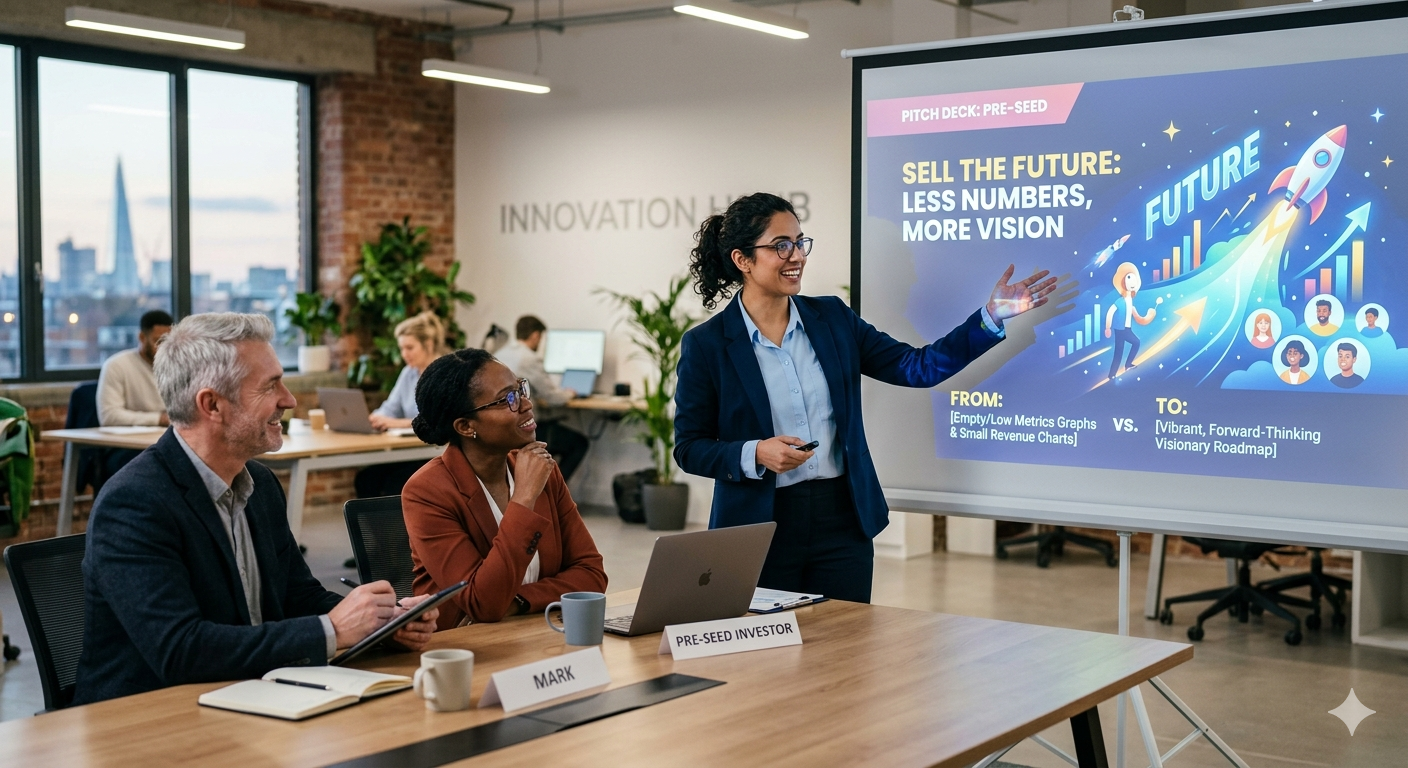
The Pre-Seed Pitch Deck: Selling the Future When You Don't Have the Numbers
No revenue? No problem. At Pre-Seed, investors buy vision over metrics. Master your "Why Now," market size, and unfair advantage to prove your startup is the future—even without the exponential growth charts.
Entrepreneurship

Why Speed Beats Strategy in Early-Stage Startups?
Early-stage startups don’t win by perfect plans, but by learning faster. Strategy without motion delays growth. Why shipping fast, fixing fast, and using real feedback beats roadmaps—especially in 2026 with AI-powered speed.
Technology
Social
Entrepreneurship