


The Pre-Seed Pitch Deck: Selling the Future When You Don't Have the Numbers
The Pre-Seed Pitch Deck: Selling the Future When You Don't Have the Numbers
In the big leagues—Series A or B—investors buy growth. But in Pre-Seed, investors buy belief. At this stage, your pitch deck isn’t about how much money you made yesterday; it’s about why you’re going to win tomorrow.
If you’re building your deck right now, put the spreadsheets aside for a second. Let’s focus on what actually moves the needle in the early days: your vision.
The "Why Now?": The Airbnb Factor
Most founders explain the what and the how, but they skip the why now?. The "Why Now" is often the most important slide for a Pre-Seed investor. It explains why your idea won't fail like the ten other versions that tried the same thing five years ago.
Real-World Example: Airbnb (2008). In their original deck, they didn't focus on complex software. Their "Why Now" was the global recession. People needed extra cash (hosts) and travelers were looking for cheaper ways to stay (guests). The crisis was their catalyst.
The Key: Identify a shift in technology, a change in consumer behavior, or a new regulation that makes today the perfect day to start.
Market Size: Don't Look for a Niche, Look for an Ocean
In Pre-Seed, a small market is a dealbreaker for Venture Capitalists. They don't want to see that you’ll capture 10% of a $1 million market; they want to see that you are playing in a space worth billions.
Real-World Example: Uber (originally UberCab). In the beginning, Uber didn't pitch themselves as just a "taxi app." They pitched a mobile logistics service. Their vision included everything from luxury transport to deliveries, expanding their potential from a few million dollars to a multi-billion dollar industry.
Pro Tip: Use the TAM, SAM, and SOM approach, but make sure your TAM (Total Addressable Market) is big enough for an investor to imagine a 100x return.
Your "Unfair Advantage": Why You?
A competitive advantage isn't "we were first" or "our UI is pretty." Your unfair advantage is something that makes it irrational for someone to bet against you.
What counts as an unfair advantage?
The Team: "We’ve spent 10 years working in this specific industry."
Proprietary Tech: A patent or an algorithm built by a PhD on the team.
Data Access: An exclusive database that no one else can touch.
Real-World Example: LinkedIn. In their early pitches, Reid Hoffman highlighted the network effect. Their advantage wasn't just the website; it was the fact that every new user made the platform exponentially harder for a competitor to replicate.
Anatomy of a Visionary Pitch Deck
To make your deck hit home, follow a narrative that prioritizes the story over the statistics:
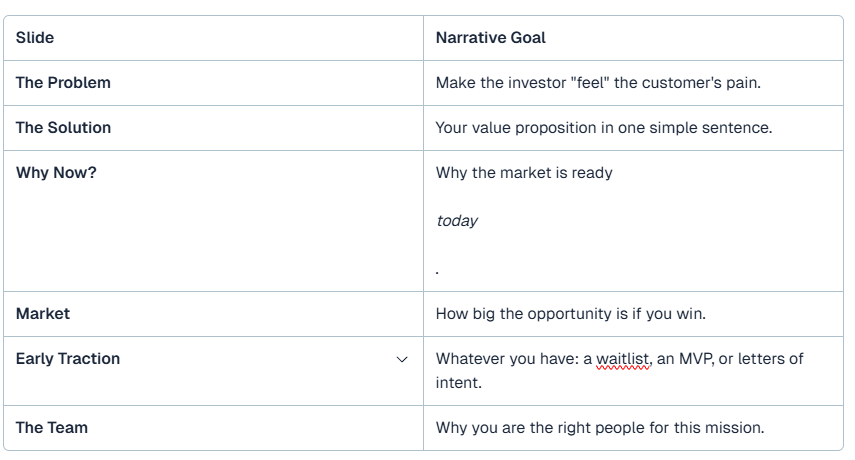
Final Thought: A Pre-Seed investor knows your product will change, your pricing will pivot, and your logo might even be ugly. What they are looking for is a team with a vision of the future so clear that it feels inevitable.
Are you ready to pitch?
Remember: in Pre-Seed, clarity beats complexity. If you can't explain why your company will be a giant in 10 years using simple words, you might need to sharpen your vision a bit more.
Which of these three points feels like the biggest challenge for your current presentation?
Related Posts
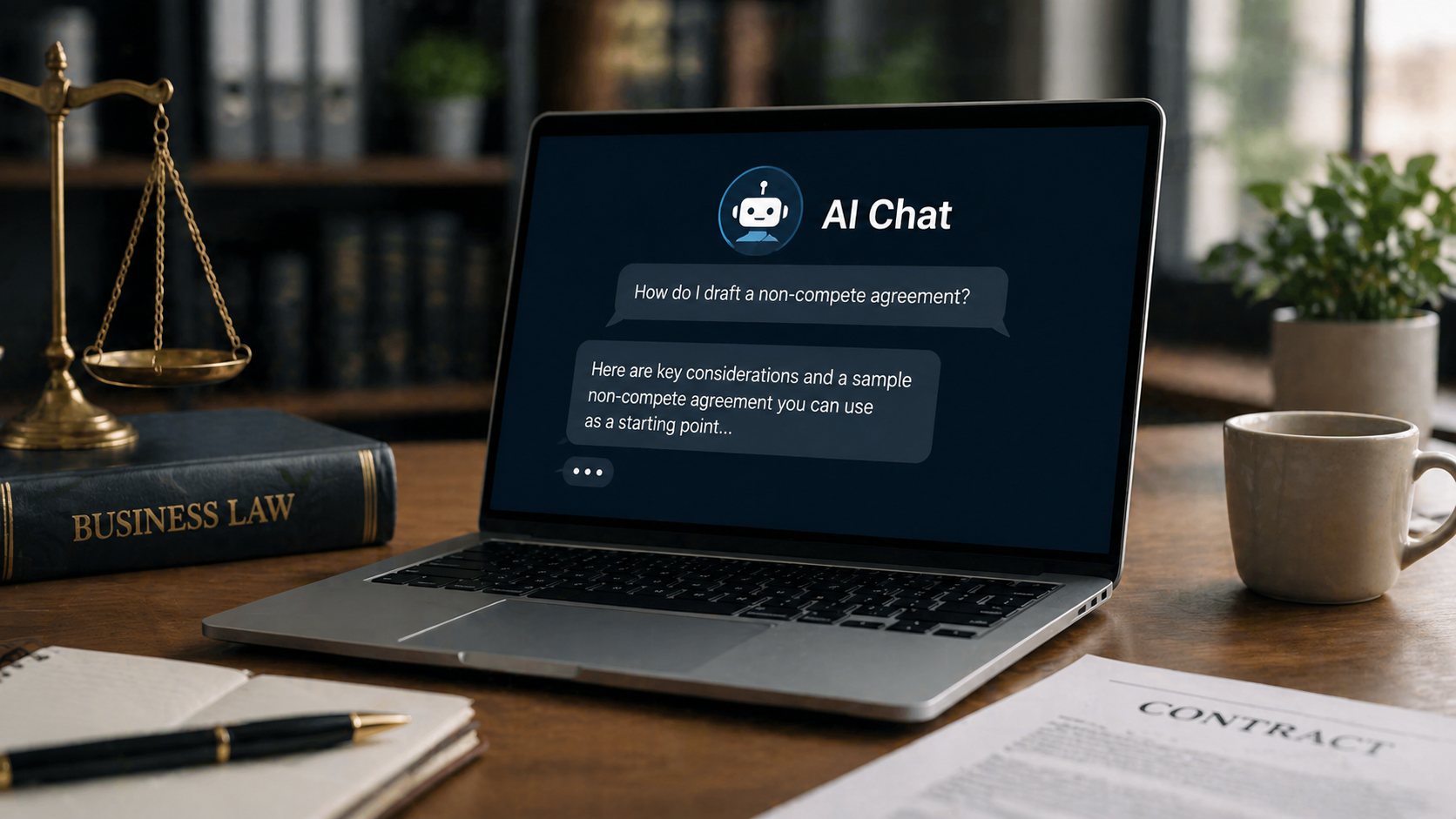
Conversations with AI May Not Be Confidential
Business owners should be careful using consumer AI tools for legal questions: prompts may not be confidential, could be discoverable in litigation, and don’t replace attorney-client privilege or professional legal counsel.
Technology
Entrepreneurship

Building a Culture That Lasts: Leadership, Growth, and the Discipline of Rest
Leadership isn’t just about growth or hard work — it’s about building trust, empowering your team, and modeling rest to create a healthy culture that lasts.
Entrepreneurship
Technology
Social

Automation for Founders in the Investment Stage
Unlock exponential growth. 🚀 Learn how venture-backed founders use automation to stop being bottlenecks and start scaling. From QA as a trust metric to data pipelines, build the "machine" that drives your vision toward Series A. Read more here.
Entrepreneurship
Technology